Park Ave Armory
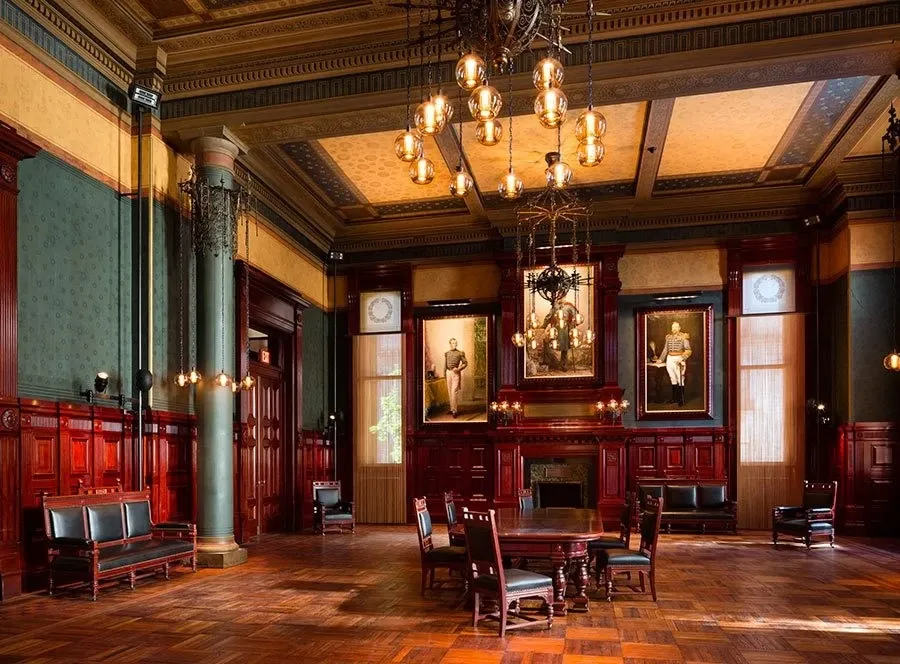
Restoration of the Board of Officers Room. Gilded Age interior by the Herter Brothers — mahogany, plaster, stenciled friezes — returned to chamber-music performance standard without disturbing a single original surface.
Architectural / Structural & Protection
643 Park Avenue, New York, NY
$22M
Park Avenue Armory Conservancy
AECOM Tishman Herzog & de Meuron / Platt Byard Dovell White
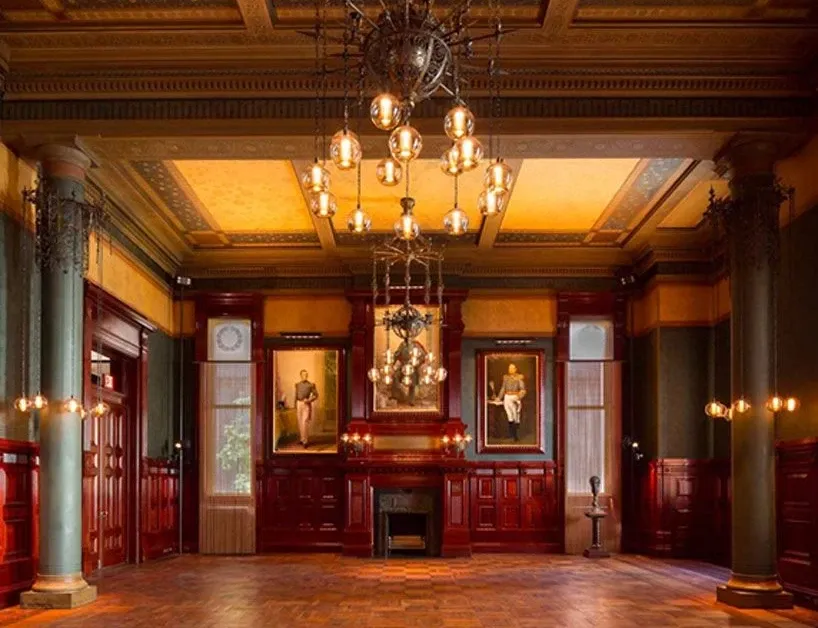
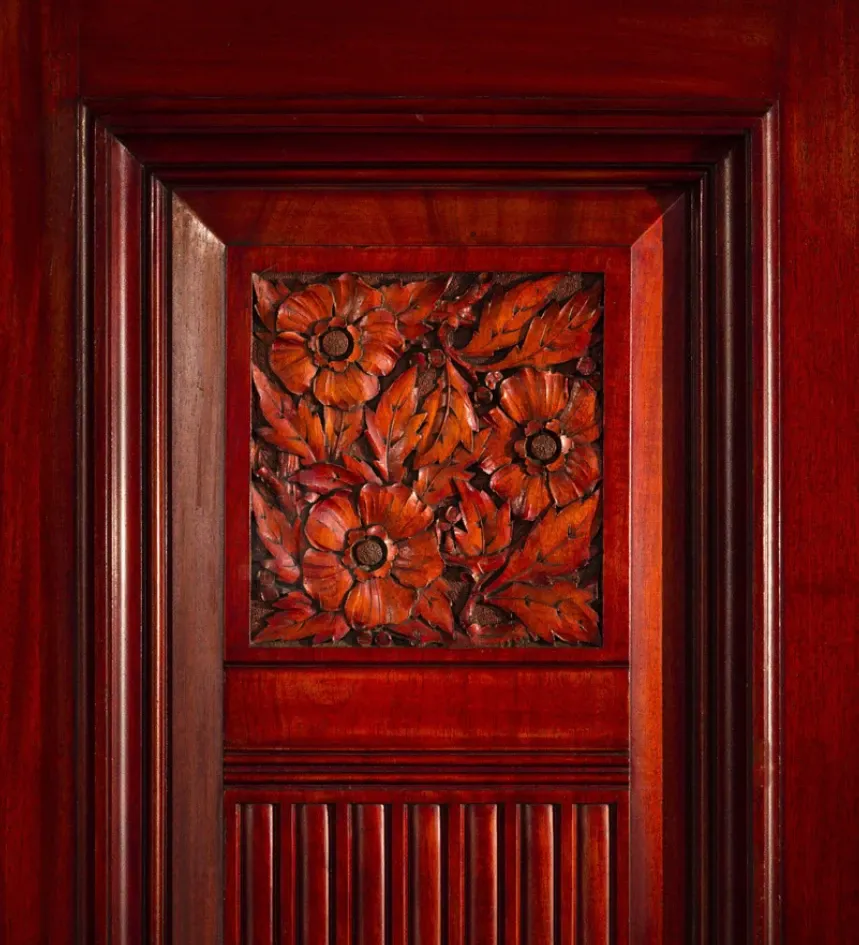
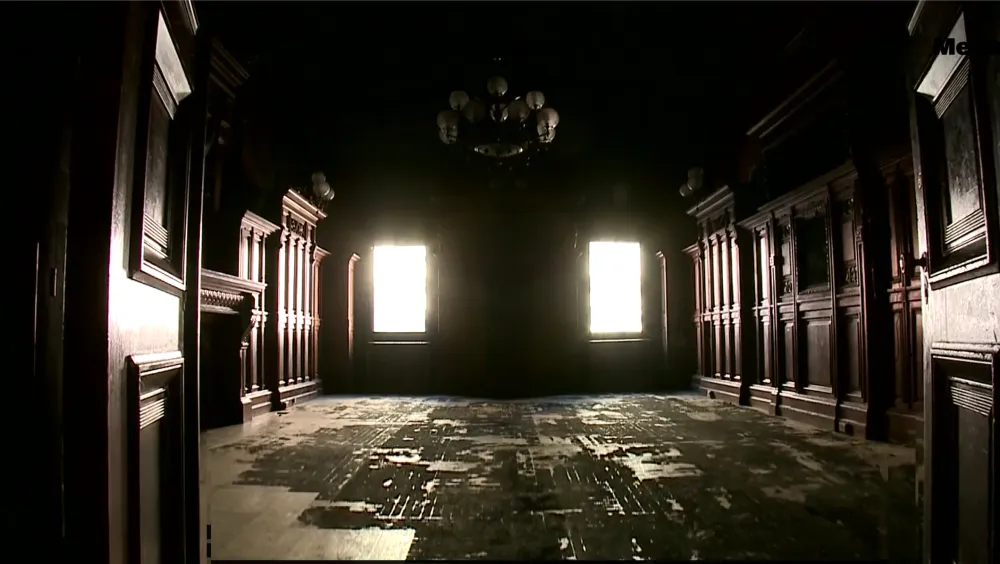
The Park Avenue Armory, completed in 1881 for the Seventh Regiment of the National Guard, stands as one of New York City's most distinguished exemplars of Gilded Age architecture. Its interiors — crafted by Louis Comfort Tiffany, Stanford White, and the Herter Brothers — represent a period when craftsmanship and artistry converged to elevate even utilitarian structures into works of art. The Board of Officers Room, designed by the Herter Brothers in 1880, is the pinnacle of this ambition: Cuban and Honduran mahogany paneling, ornate plaster ceilings, stenciled friezes, and etched glass details of extraordinary opulence and precision. Over more than a century, chronic water infiltration, failing systems, and ad-hoc retrofits left the space compromised. The very elements that once defined its grandeur had become fragile remnants of a bygone era.
Technical
Scope
AECOM Tishman
Herzog & de Meuron / Platt Byard Dovell White
$22M
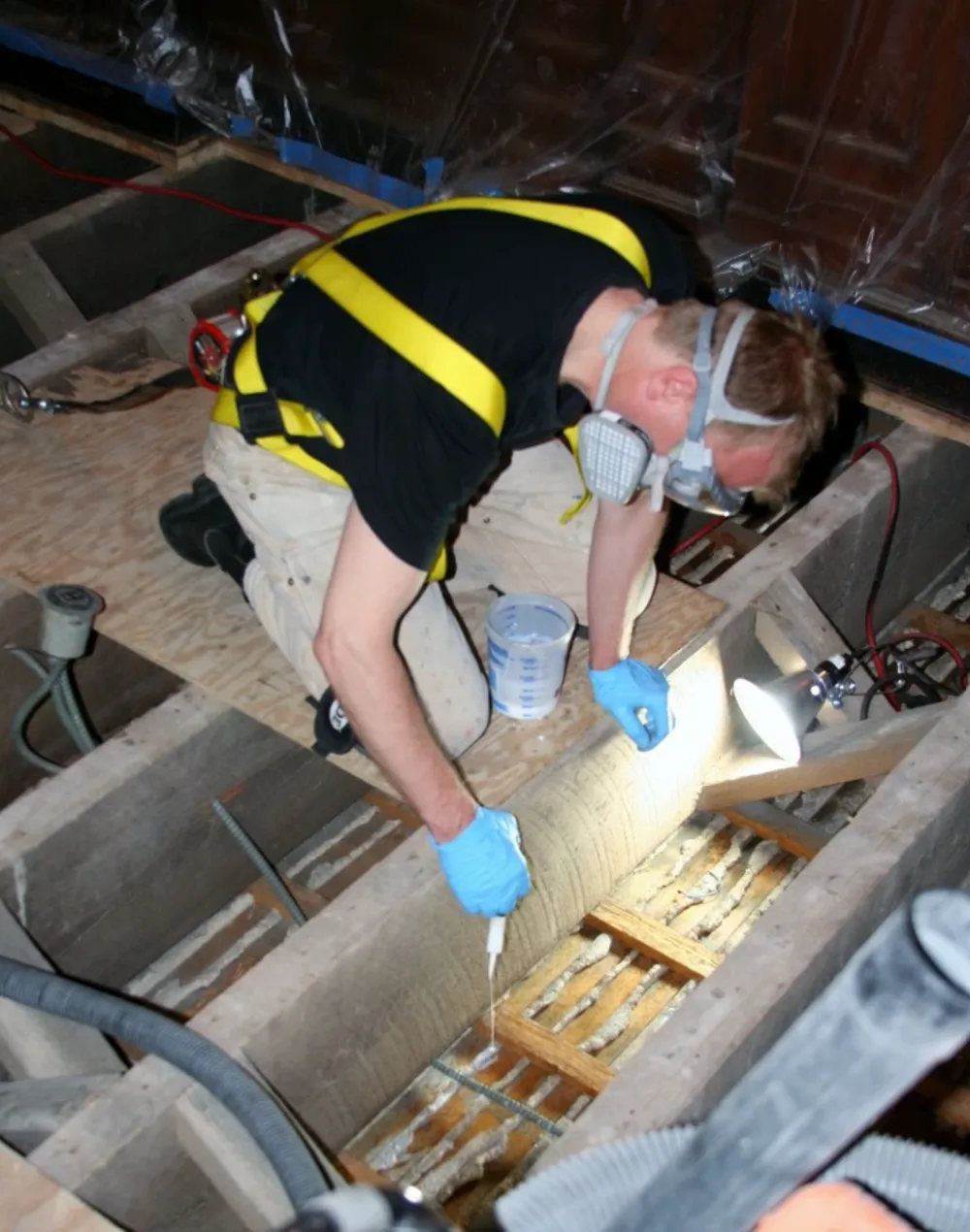
The scope required transforming a deteriorated Gilded Age interior into a modern performance venue while preserving complete historic integrity. Original mahogany paneling, ornate plaster ceilings, stenciled friezes, and period lighting fixtures were restored under strict landmark and archival standards. Structural reinforcement used LVLs and through-bolted steel rods to strengthen joists and support new concealed systems without disturbing the existing framework. A floating acoustic ceiling on spring and elastomer hangers was installed, fully insulated and sealed to achieve a Noise Criterion of NC-25 — suitable for chamber music and intimate performance. A low-velocity HVAC system was routed through existing cavities with acoustically treated terminations. Historic fixtures were retrofitted with LED sources replicating gaslight warmth. All interventions were reversible, non-invasive, and acoustically neutral.
The carpentry scope demanded millwork-level precision throughout. Pocket-door acoustics required drop seals, tuned rails, and acoustically treated pockets calibrated with the accuracy of fine joinery — reveal lines, strike alignment, and seal compression all measured to tolerances consistent with musical instrument fabrication. The floating ceiling system required precision coordination between structural hangers, acoustic insulation layers, and the historic plaster crown above. Every transition between new and original elements was executed without visible joint, patch, or finish discontinuity. Stenciled friezes were restored in kind by conservation specialists working alongside the carpentry team.
Protection protocols were commensurate with the Armory's landmark status and the irreplaceable nature of its surfaces. Dust, vibration, and access control were governed by field protocols established and enforced from day one. Containment zones protected adjacent spaces and conserved surfaces. Live occupancy was maintained above the work zone throughout the project. Environmental stability of the mahogany, plaster, and gilded surfaces was maintained through continuous monitoring and controlled humidity protocols.
The Founding
Partners
The Founders of GCC embraced the management of the Architectural/Structural and Protection/Logistics scopes for the Board of Officers Room Restoration. Their leadership ensured precise coordination of all field operations within the constraints of a fully landmarked and rapidly decaying facility. Working in close alignment with the design and conservation teams, they oversaw structural reinforcements, MEP routing, and acoustic assemblies integrated into the historic envelope without compromising original fabric or finishes. Their hands-on management, technical expertise, and uncompromising attention to detail delivered a zero-incident project meeting the Armory's exacting performance, conservation, and aesthetic standards.
Project
Outcome
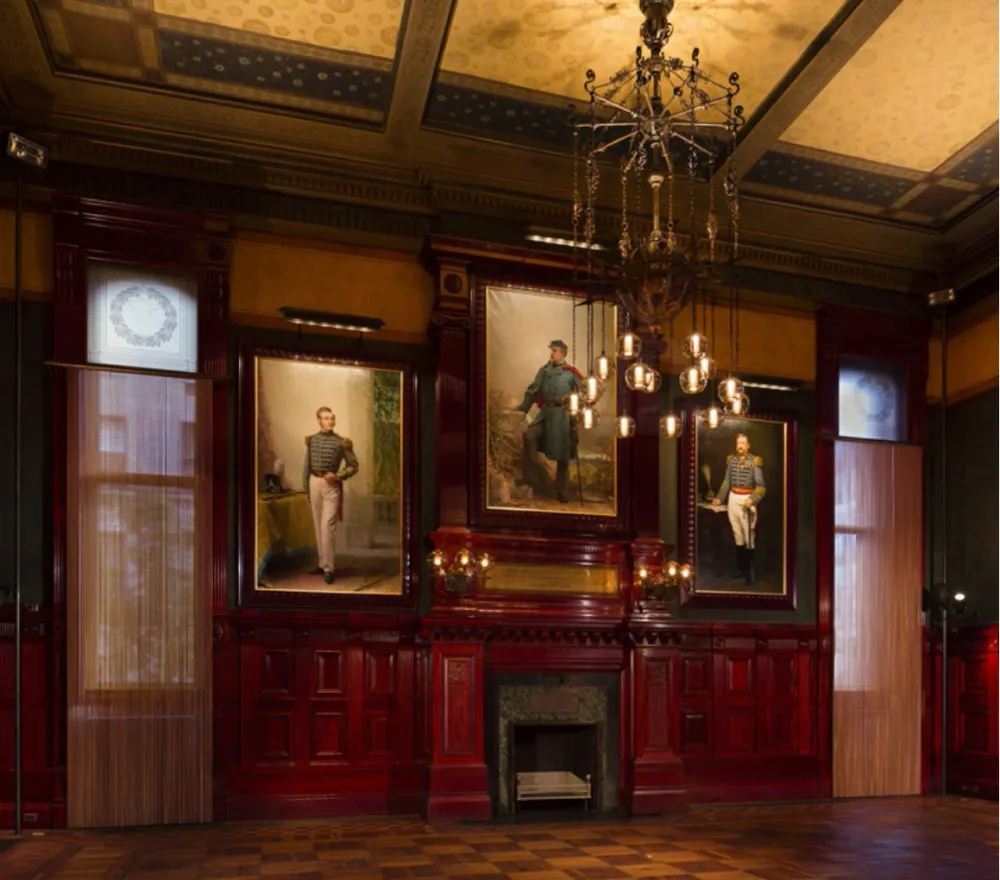
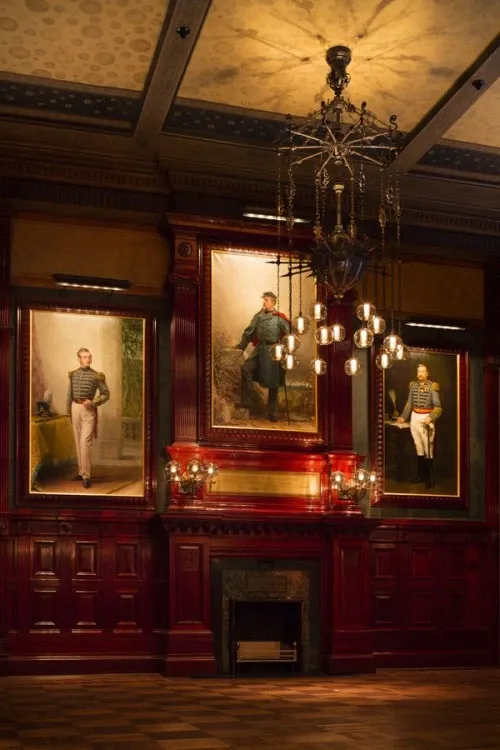
The result is a masterclass in heritage rehabilitation. Behind its restored glowing mahogany panels, reinstated decorative plaster crowns, and softly illuminated period lighting lies an invisible network of precision-engineered systems providing environmental stability, ADA accessibility, and acoustic performance at NC-25. The room stands not as a static monument to the past but as a living environment where historic beauty and modern functionality coexist — reaffirming the Armory's role as one of New York's most remarkable intersections of architecture, culture, and preservation.