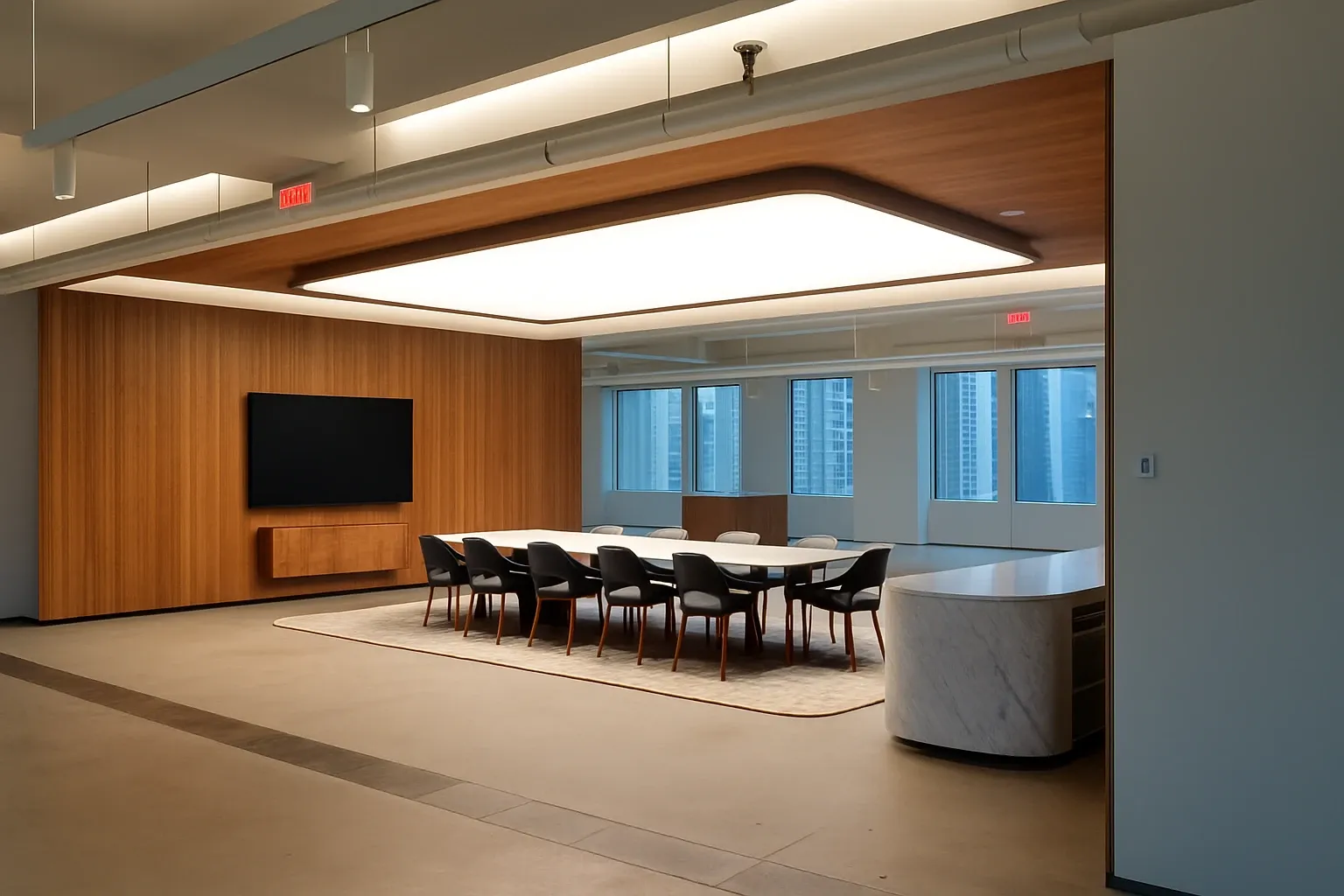
Sovereign Architecture
Structural integrity.
GCC Genesis was not established to pursue volume. It was established because a specific category of construction project — the kind conducted inside active museums, landmarked civic buildings, century-old masonry structures, and mission-critical science facilities — requires a different firm entirely. One that does not treat institutional risk as a line item to be managed but as the primary operational condition around which every decision is sequenced.
We do not bid on generic commercial fit-outs or paper-thin drywall packages. Our operating environment is defined by collections that cannot be disturbed, substrates that cannot be damaged, institutions that cannot close, and clients for whom cost deviation is as structurally unacceptable as a failed connection. Every project we accept is, by definition, one that a commodity contractor is not equipped to absorb.
The Founders built this firm out of decades of direct field leadership across New York's most protected and high-consequence construction environments. That record is documented in the Archives. What it produced is a firm with zero tolerance for imprecision, no interest in minimum acceptable outcomes, and a labor force drawn exclusively from the upper tier of New York's union trades — craftsmen who inherited their methodology across generations and who are not available to firms that do not know how to deploy them.
This is GCC Genesis. The work speaks with specificity, or it does not speak at all.
The Mandate COL I
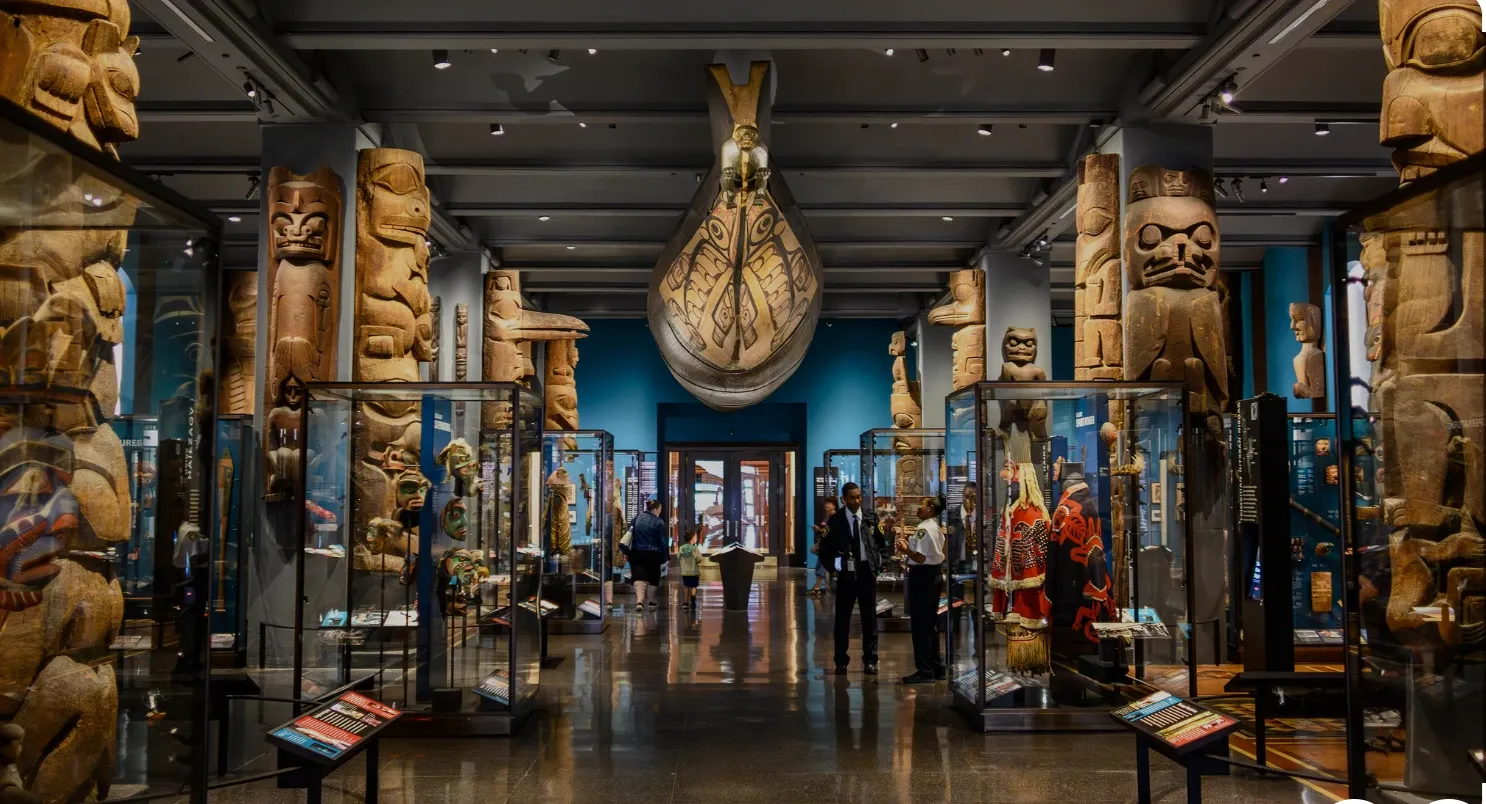
New York City produces a narrow category of construction project that no generalist firm is genuinely positioned to execute: the active museum mid-renovation, the century-old landmarked building receiving new mechanical infrastructure, the occupied university building with a structural problem and a semester already in session. These are not difficult projects in the way that large projects are difficult. They are difficult in a different register entirely — one that requires the contractor to understand the institution's operating constraints with the same fluency they bring to the building's physical structure.
GCC Genesis was established specifically to triage that category of work across the five boroughs. We operate inside active natural history collections, landmark-designated civic structures, heavy-load research environments, and municipal properties under multiple layers of historic designation. Our site conditions are, by default, hostile: occupied spaces, irreplaceable fabric, compressed logistics, and institutional stakeholders who have no tolerance for disruption and no room for schedule variance.
We do not view this as a constraint. We view it as the condition that defines what we are built to do.
Generational Labor COL II
There is no substitute for generations of muscle memory. A rigorous design strategy collapses the moment it contacts a labor force that has not executed at this level before. The environmental containment protocols, the vibration sequencing, the reversible fastening methodology, the tolerance requirements on Level 5 gypsum finish work inside an occupied landmark — none of it is taught in a credential program. It is inherited, refined over decades, and present only in tradespeople who have spent careers working at the intersection of craft and institutional constraint.
GCC Genesis operates exclusively with elite union tradesmen. We sequence lifetimers. Our carpenters, drywall applicants, and ironworkers bring apprenticeship lineages that run deep into New York's institutional construction history. This is not a symbolic commitment to union labor — it is a technical requirement. The environments we work in demand it. The clients we serve depend on it. The irreplaceable things inside these buildings require it.
We do not assemble crews. We deploy craftsmen who already understand what the work demands before the first drawing is issued.
Capital Defense COL III
For institutional stakeholders and public-sector principals, financial deviation is not an inconvenience. It is a governance event. GCC Genesis approaches cost protection with the same operational rigor as physical construction. Precision must be established on paper before it is committed to concrete.
Pre-construction is where we contain risk. Aggressive clash detection, full BIM coordination across MEP and structural systems, zero-tolerance supply chain protocols, and phased sequencing that builds contingency into the schedule rather than banking on its absence — these are not premium services. They are the operating standard. Our clients are not buying a construction management philosophy. They are buying the guarantee that the project finishes inside the budget they approved, inside the timeline their institution requires, without a single avoidable disruption to the operations occurring above, below, or adjacent to our work.
Capital defense is the contractual obligation we treat as the architectural one.
"Precision must be established on paper before it is committed to concrete."
Founding Field Leadership SEC 03.1
GCC's founding leadership brings a combined record of field command across New York's most technically demanding and institutionally protected construction environments — active cultural institutions, landmark-designated civic structures, occupied research facilities, and historic buildings under simultaneous LPC oversight and live programming. Their field record predates GCC's founding and is documented in the Archives. What it establishes, in aggregate, is not a biography. It is a calibration standard.
In this category of work, the firm is only as credible as the people who have already stood inside these buildings, understood what was at stake, and delivered without damage. The Founders have. The Archives document where.
The Labor Discipline SEC 04.1
The union trade lineages GCC deploys are not logistical inputs. They are the firm's primary technical asset — the difference between a project that holds its tolerances across an occupied landmark renovation and one that does not.
Carpenters
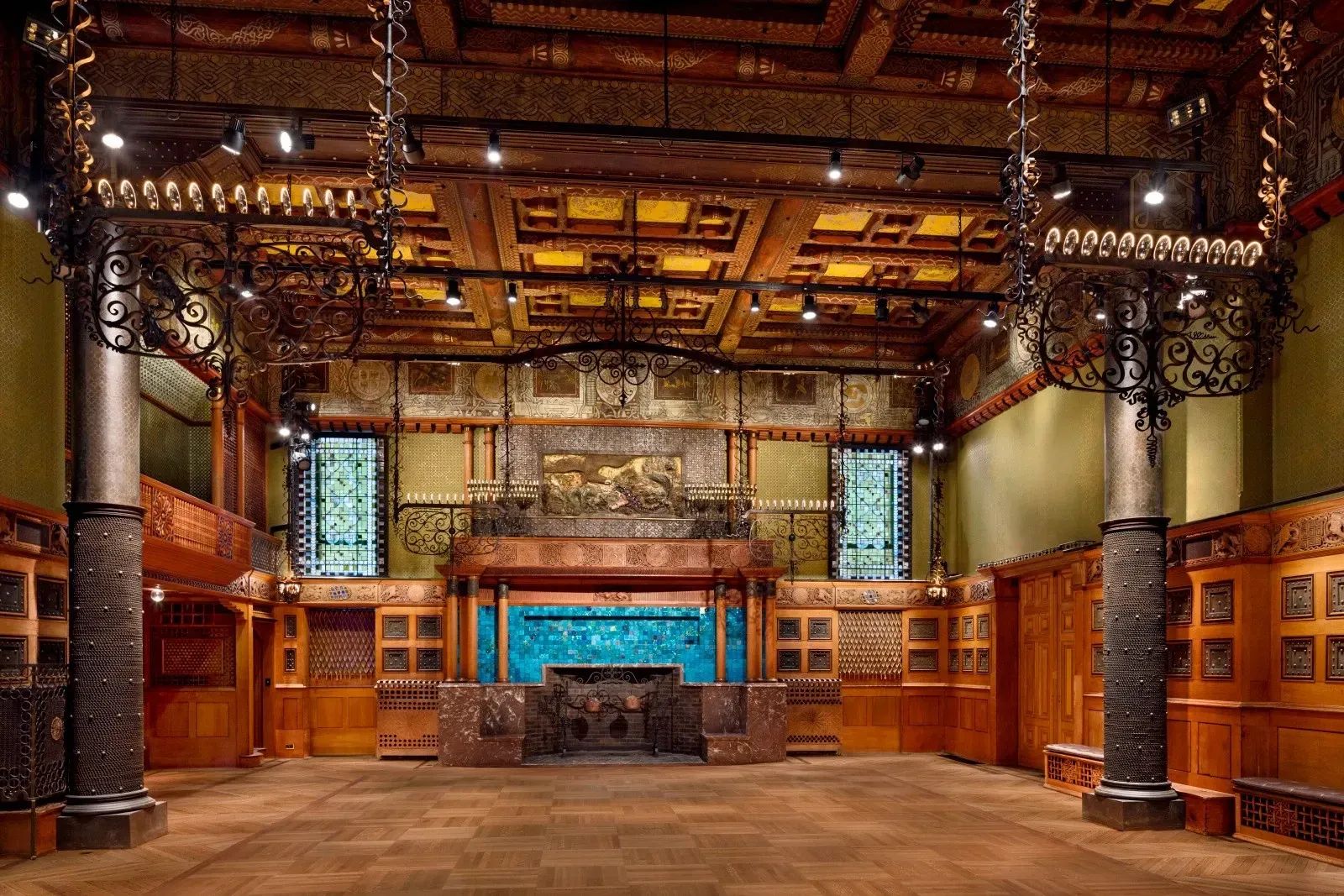
GCC's carpenter crews are sequenced for institutional precision: millwork in occupied galleries, restoration carpentry inside landmark interiors, specialty substrate work where tolerance deviations are measured in fractions of a millimeter against an 1880 finish standard. These are not production framers. They are craftsmen with career histories inside the most demanding architectural environments in New York.
Drywall Applicants
Level 5 finish work on compound-curved gypsum geometry inside an active natural history museum is not a drywall subcontract. It is a precision execution problem that requires tradespeople who have done it before, under the same environmental constraints, to the same institutional standard. GCC's drywall applicants carry that record.
Ironworkers
In environments where a vibration threshold is a preservation parameter — where the adjacent Hall of Ocean Life contains a 94-foot blue whale suspended from engineered steel and monitored throughout construction — the ironwork is not a background trade. GCC deploys ironworkers calibrated to mission-critical environments where structural intervention and artifact protection are simultaneous requirements.
The apprenticeship lineage behind each of these trades is not romanticized here. It is documented through the project record. The methodology is inherited, tested across decades, and non-negotiable.
Administrative Rigor SEC 05.1
GCC Genesis operates within New York City's most layered regulatory environments as a matter of standard practice, not exception. Facilities Inspection Safety Program (FISP) protocols, Landmarks Preservation Commission oversight, Local Law compliance across structural, mechanical, and fire-protection scopes, and full union certification across all active trade disciplines — these are not credentials held in reserve for competitive advantage. They are operational requirements for the project types we accept.
Our regulatory posture is pre-emptive. Documentation is current, inspections are not treated as external events, and compliance is built into the pre-construction sequence rather than reconciled at closeout. Institutional clients and public-sector principals should expect, and will receive, an administrative record that reflects the same precision as the field record.
Operating Territory SEC 06.1
GCC Genesis is a New York City firm. Not regionally — operationally. Our field intelligence is specific to the five boroughs: the procurement ecosystems, the regulatory frameworks, the landmark-designation landscapes, the union jurisdiction structures, and the physical conditions of pre-war institutional fabric that does not behave the way the drawings suggest.
The concentration of our work runs along the institutional spine of Manhattan — museum corridors, civic campuses, performing arts infrastructure, and university buildings — with active project histories extending across all five boroughs. We do not operate outside New York City. The specificity of what we do is inseparable from the specificity of where we do it.